

How Smart Technology can help environmentally sustainable social housing
 Ewa Hodden 17 November 2021
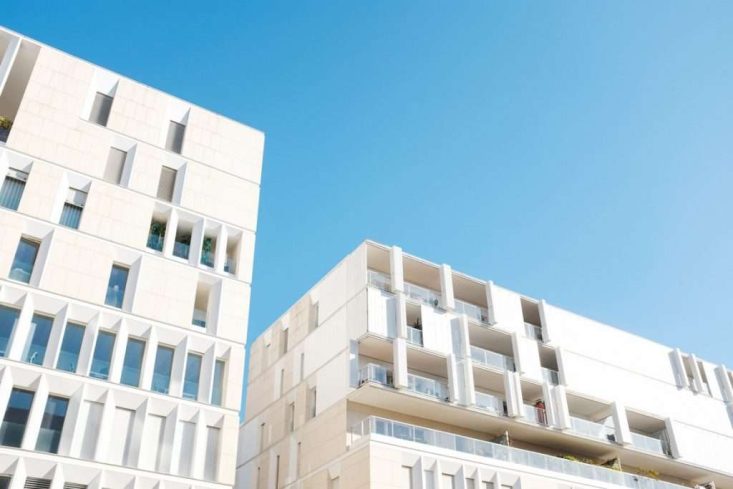
With COP26 held recently in Scotland, environmental issues are under the spotlight. Countries around the world are expected to produce a slew of commitments relating to reducing emissions. The UK has already committed to a wide range of targets and enforced policies designed to cut its greenhouse-gas emissions to net-zero by 2050. As one of the UK’s worst energy offenders, housing is a key focus area. And with the government’s direct management of Social Housing, these properties offer a good starting point and benchmark.
The Committee on Climate Change reports that housing is responsible for 14% of the country’s greenhouse gas emissions. The main culprits are gas boiler heating systems and poor insulation. That’s why the Insulate Britain campaign is demanding that the government insulate all social housing by 2025. In addition, they are campaigning for all homes in Britain to be retrofitted to be low-energy and low-carbon by 2030.
Out of the existing 29 million homes in the UK, only eight million homes currently meet the highest energy standards. Part of the reason behind this is that most of the UK’s housing dates back to before (and often well before) the 1990s, which means that it’s not designed to be energy efficient by today’s standards. Outdated construction comes with a slew of other issues that affect people’s health and wellbeing, such as fuel poverty.
That’s why—in addition to lower carbon footprints—greener and more energy-efficient buildings could also see people’s energy bills reduced, allow people to live more comfortably in their homes, and clean up the air we breathe.
Recommended improvements to the energy efficiency of homes include:
- Insulation
- Double glazing
- Replacing gas boilers with heat pumps
- Low-energy lightbulbs
- Draught proofing
In London, Mayor Sadiq Khan has outlined plans for a new generation of social housing. The £4 billion Affordable Homes Programme (AHP) for 2021-26 is set to build new social housing that is well-designed, safe and environmentally sustainable. This is in line with the city’s ambitious target of becoming a zero-carbon city by 2030.
The new sustainability standards for the AHP include:
- Developments to be net zero-carbon
- Incorporate sustainable urban green spaces
- Install fire suppression systems in new blocks of flats
- Banning combustible materials being used in external walls
- Private outdoor space
- At least one room to have direct sunlight for at least part of the day
Further north in Newton Heath, there are plans to build 69 low-carbon homes as part of a social housing initiative. ‘Green’ features include living walls, shared outdoor green spaces, generous gardens, solar panels, living green roofs, heat pumps, and mechanical ventilation with heat recovery. These technologies will also help to keep utility costs down for residents.
The good news is that the technology already exists to retrofit social housing to a point that maximises energy efficiency, reduces costs and improves the lifestyles of its inhabitants. One of the key ways of doing this is to use smart meters and automated meter readers (AMRs) to ensure that energy consumption is kept under control and helps to build the social housing of the future.
Smart and AMR meters allow building managers and residents to see exactly how much energy a building is using. Knowing how much gas, electricity and water is used by a household or building in a day and over time is the first step in reducing and optimising consumption. Along with supporting energy-efficiency efforts, intelligent metering technology also enables more accurate bills, and can help residents reduce their utility bills.
Simply placed on existing water meters, AMR devices can feed utility consumption data into a smart portal in real time. This allows residents, building managers and policymakers to track energy usage and spot any issues or unusual increases. These platforms for energy management are also evolving; some of them now provide sustainability reports that collect data about how properties perform on key issues impacting our climate.
Thankfully, technology is opening up the industry in terms of finding new solutions and innovative new ways to address the green needs of the UK’s social housing; technologies that will hopefully find their way into all UK households and buildings.

