

Interactive exhibition unveils health care ideas
 Leslah Garland 15 November 2021
From Bhutan to Peru, from the US to Uganda; 150 highly innovative academic projects to improve lives, support communities and protect the planet have been unveiled.
Part of the largest edition of Global Grad Show to date, the shortlisted entries, selected amongst 2,600 submissions from 70 countries, underline key shared concerns internationally, from infant care to helping the elderly, and illustrate the scale of the efforts – and combined approach – necessary to address them.
Several themes have emerged in this year’s edition, pointing to the shared concerns of graduates, with this being the first Global Grad Show to take place since the world starts to emerge from the pandemic. In ‘health’, there is a focus on bypassing traditional healthcare systems, putting greater ownership in the hands of individuals. Ideas include a digital malnutrition monitor, an exoskeleton for stroke rehabilitation and mobile-enabled skin scanner. Notable projects include:
- A lower-body exoskeleton rehabilitation system for children with cerebral palsy, Pratt Institute, United States
- A high tech toy that teaches children with autism primary emotions so they can communicate better; San Francisco State University; United States
- An upper limb prosthetic that gives children the use of a bionic arm to develop their muscle memory during their growth years; National Institute of Design, India
- An LED steering wheel that monitors a driver’s vital signs and stress levels; Loughborough University, UK
- An electronic drawing tool that takes traditional art equipment, like pens and pencils, and enables people with a physical disability including the most highly paralysed people, to independently draw in a physical manner; University of Brighton, UK
- An adaptable cushion for pregnancy that promotes weight distribution allowing for longer, comfortable sitting, Pennsylvania University, United States
- Acoustic based mood tracking to monitor for mental health; Keio University – Graduate School of Media Design
- 3D printed fully biodegradable footwear with self-healing capabilities to extend its usable lifetime; Imperial College London, UK
- A photosynthetic skin for the human body, which generates energy from light harvesting, Elisava School of Design, Barcelona, Spain
- The first AI drug discovery company to specialise in cardiovascular disease; University of Cambridge, UK
- Emoticons converted into Braille to help those with vision impairment to communicate; Hasselt University, Belgium
- A wireless sensory rich device that helps premature infants bond with their parents; University of Arts and Industrial Design Linz
- A thermal camera attached for smartphones which scans for fevers; Rizal Technological University, Philippines
- A life detection ball with built-in sensor chips that can detect signs of life in natural disasters within a radius of 5 metres; Zhejiang University, China
- An alternative to blood glucose testing for diabetics, with a device that analyses levels of acetone in exhaled breath for pain free health monitoring; Zhejiang University, China
- An exoskeleton hand for stroke rehabilitation patients; Santos Dumont Institute, Brazil
Now in its seventh year, Global Grad Show, an initiative by the Art Dubai Group that supports the world’s most promising academic talent in the field of social and environmental impact, reports that it has received 50% more applications compared to last year, from a network of 464 universities (a 70% increase from 2020). The growth indicates a rising interest among students to solve issues faced by individuals, the society and the environment.
The 150 shortlisted projects are a reflection of what graduates around the world have concentrated on last year, spotlighting some of the world’s major challenges and the most promising ideas to address them. These solutions alternate between theoretical and practical, complex and simple, and hail from the likes of Oxford, Cambridge and Ivy League institutions to colleges in Indonesia, Mexico and Oman. Such diversity evidences how different approaches can contribute towards common goals. Six new countries having submitted innovations for the first time this year: Bhutan, Jamaica, Ethiopia, Vietnam, Congo and Brunei.
Several themes have emerged in this year’s edition, pointing to the shared concerns of graduates, with this being the first Global Grad Show to take place since the world starts to emerge from the pandemic. These include projects in healthcare and wellbeing (44 entries) and safety and emergency (25 entries), while future-readiness becomes a key common denominator among production and consumption (41 entries), community and inclusion (30 entries) and education and awareness (21 entries).
The ultimate objective for innovating is also broadening. In ‘health’, there is a focus on bypassing traditional healthcare systems, putting greater ownership in the hands of individuals. Ideas include a digital malnutrition monitor, an exoskeleton for stroke rehabilitation and mobile-enabled skin scanner. Within ‘new materials’, projects are looking into an integrative approach between sustainability and progress, including industrial sealants and flame retardants made out of natural components and self-healing textiles and construction materials.
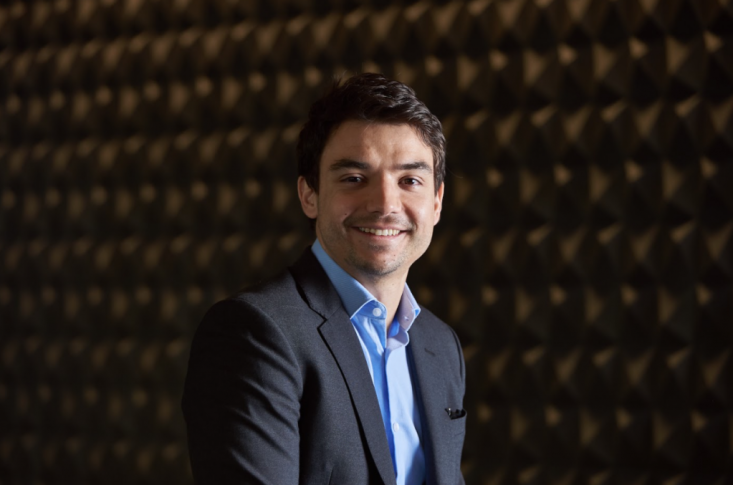
Tadeu Baldani Caravieri (pictured) director of Global Grad Show, said: “In the wide spectrum of what innovation means and does, Global Grad Show projects sit at a very distinct position: their primary objective is to create positive net results to the world, either by solving existing problems or preventing new ones. When we look at the volume and quality of these projects across the world, it’s possible to believe in a scenario where their impact outpaces complex global challenges. That alone is a very strong reason to support young entrepreneurial minds working inside universities. There’s probably no group better equipped to build positive change from the ground up.
We are very thankful to the thousands of students and professors who shared their vision with us since 2015 and for the opportunities to grow the programme with our partners, leveraging Dubai’s infrastructure and forward-looking vision. We are extremely excited to be opening our most far-reaching edition ever today. ”
All applying students will have the chance to join Global Grad Show’s entrepreneurship programme this year, a 4-month development route to bring venture-building thinking and opportunities to applicants who want to take their projects forward. Since 2019, it has welcomed over 300 participants – a figure that has tripled for this year’s cohort alone.
The virtual showcase with the 150 projects in this year’s edition is available on www.globalgradshow.com. Simultaneously, the MENA Grad Show, a physical exhibition dedicated to social impact innovation by students from universities in the Middle East and North Africa will open today, as part of Dubai Design Week, supported by Dubai Design District (d3).

